How Long Does a Sleep Study Take? Timelines Explained
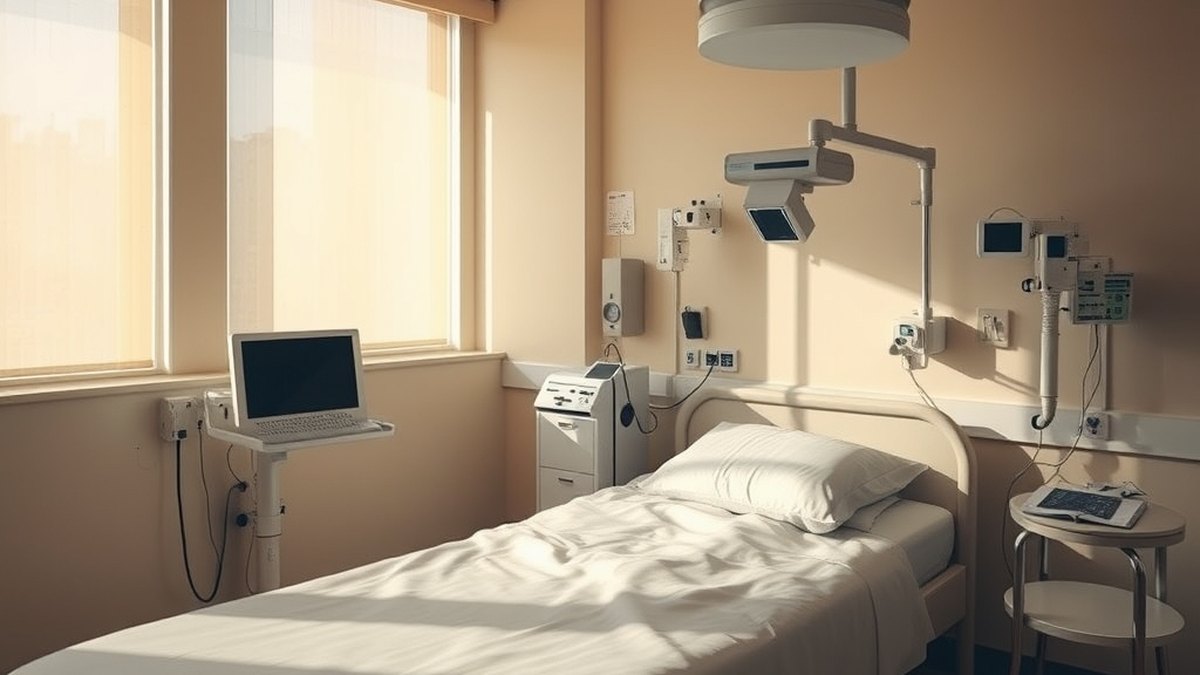
⚡ Key Clinical Takeaways
- A sleep study is a medical recording of what your body does during sleep: brain activity, breathing, oxygen, heart rhythm and muscle movement.
- The recording itself is one night, and the NHLBI states that sleep tests at a sleep center usually last overnight.
- A home sleep apnea test records your breathing, oxygen and heart rate in your own bed.
- Two less common tests run during the day, and they take longer than a night study.
- Knowing the sequence keeps the evening predictable:
Quick answer: An in-lab sleep study takes one night. Plan for roughly 9 to 10 hours at the sleep center: you arrive in the early evening, sensors are placed for about 30 minutes, and the recording runs about 6 to 8 hours while you sleep before you are released the next morning. A home sleep test records one night, and many protocols ask for two to three nights of data.
A sleep study, also called polysomnography, is a painless test that records brain waves, heart rate, breathing, blood oxygen and body movements during sleep so a physician can diagnose sleep disorders such as sleep apnea. The National Heart, Lung, and Blood Institute (NHLBI) describes these tests as overnight recordings that measure how well you sleep and how your body responds to sleep problems.
This guide breaks the total time into its parts — scheduling, the night itself, home testing, daytime tests, and how long results take — so you can plan work, childcare and travel around the appointment.
What is a sleep study and what does it record?
A sleep study is a medical recording of what your body does during sleep: brain activity, breathing, oxygen, heart rhythm and muscle movement.
Sensors are placed on the scalp, face, eyelids, chest, abdomen, limbs and a finger. None of them break the skin, and the NHLBI notes the main side effect is mild skin irritation that goes away after the sensors are removed.
The recording answers a specific question: which sleep disorder, if any, is disturbing your sleep, and how severe it is. Under Medicare rules, sleep studies are ordered tests that monitor sleep patterns, breathing and movement to find out whether you have a sleep disorder, and your doctor must order the test.
How long does an in-lab sleep study take?
The recording itself is one night, and the NHLBI states that sleep tests at a sleep center usually last overnight. In practice, the whole visit works out to roughly 9 to 10 hours at the lab.
A typical timeline looks like this:
- Early evening (around 7:00–9:00 p.m.): you check in, complete paperwork and change into your own sleepwear.
- Sensor setup (about 30 minutes): a technologist attaches the sensors and tests each signal.
- Recording (about 6–8 hours): you sleep while the equipment records. A technologist monitors the recording all night from another room.
- Morning (around 5:30–6:30 a.m.): sensors are removed and you leave shortly after waking.
These clock times are typical practice rather than a rule — your confirmation letter will state the lab's own times. One figure is regulation rather than practice: Medicare covers Type I sleep tests only when they are performed in a sleep lab facility, which is why this attended, facility-based format exists.
Some labs also run a split-night study: the first half of the night is diagnostic, and if apnea is clearly severe, the second half is used to fit and adjust a CPAP mask. You still leave the next morning, so the total stay does not change.
How long does a home sleep test take?
A home sleep apnea test records your breathing, oxygen and heart rate in your own bed. The recording covers at least one night, and many clinics ask you to wear the device for two to three nights so a single restless night does not skew the result.
The nightly effort is small: you fit a nasal cannula, a chest belt and a finger probe, press start, and sleep normally. Setup takes about 10 to 15 minutes once someone has shown you the device. The time cost is mostly logistics — picking up the kit, sleeping with it, and returning it the next morning.
NHS guidance for suspected sleep apnoea describes the same pattern: you are given monitoring devices at a sleep clinic, wear them overnight at home, and stay overnight in the clinic only in some cases.
Daytime sleep tests: how long do MSLT and MWT take?
Two less common tests run during the day, and they take longer than a night study.
The multiple sleep latency test (MSLT) measures how quickly you fall asleep during a series of daytime naps, with sensors recording brain activity and eye movements. Between naps you stay awake in a dim room, so the test occupies most of a day — and it usually follows an overnight study in the same lab, making it an all-night-and-day visit.
The maintenance of wakefulness test (MWT) measures your ability to stay awake and alert while sitting quietly, in daytime sessions.
Actigraphy is a third format: a small watch-like motion sensor worn at home. NHLBI describes wearing one for several days or sometimes weeks, and its insomnia guidance cites 3 to 14 days of wear.
| Test | Where | Recording time | Total time commitment |
|---|---|---|---|
| In-lab polysomnography | Sleep center | One night, ~6–8 hours recorded | ~9–10 hours on site, overnight |
| Home sleep apnea test | Your home | 1–3 nights | Minutes per night plus kit pickup/return |
| MSLT (daytime) | Sleep center | 4–5 scheduled naps | Most of a day, after an overnight study |
| Actigraphy | Your home | 3–14 days (or weeks) | Wear continuously; one pickup visit |
What happens during the night, step by step
Knowing the sequence keeps the evening predictable:
- Arrive at the time on your confirmation, with your paperwork, medications and sleepwear packed.
- Fill out forms and answer a short questionnaire about your sleep and medications.
- Change into sleepwear and settle into the bedroom while the technologist attaches sensors — scalp, face, chest, abdomen, legs and finger.
- Test each signal, then get into bed at your usual bedtime.
- Sleep while the recording runs; if you need the bathroom or a tissue, call the technologist, who will unclip the leads.
- Wake at the scheduled time, have the sensors removed, and leave.
If you sleep badly, the night still counts: even a short, fragmented recording often captures enough breathing data. If it truly does not, the study can be repeated.
One practical note: the sensors do not stop you from turning over or getting up. Wires run to a small headbox the technologist can unclip in seconds if you need the bathroom, and the monitoring room watches the signals all night. Most first-time patients say the hardest part was falling asleep with something on the face — not the length of the night.
Sleep study vs home sleep test: time and what each delivers
The time difference mirrors the difference in scope. An in-lab study trades convenience for detail: more signals, staff on site, and the ability to detect disorders beyond breathing. A home test trades detail for a night in your own bed at lower cost.
The American Academy of Sleep Medicine's patient guide lays out the trade-off directly. An in-center test offers a more accurate diagnosis, can detect other sleep disorders, and is observed by staff; its disadvantages are higher cost and possible disruption of your normal sleep schedule. A home test is less expensive and more comfortable, but measures less and is more likely to give inaccurate results if the equipment is set up incorrectly.
AASM guidance also sets the boundary: home testing suits adults whose symptoms point to a higher risk of moderate-to-severe obstructive sleep apnea — significant daytime sleepiness plus at least two of routine loud snoring, witnessed gasping, choking during sleep or high blood pressure — and who do not have significant heart or lung disease, neuromuscular conditions, a history of stroke or chronic opioid use. If your case does not fit that profile, expect the attended format.
How long do sleep study results take?
The recording is not the answer — someone has to score it and a physician has to interpret it.
The raw study is scored (sleep stages and breathing events are marked), then reviewed by a sleep physician, who sends a report to the doctor who ordered the test. In many clinics this takes from a few days to two weeks; your clinic can give a specific estimate, and the report usually goes to the ordering physician rather than to you directly.
What comes back is numbers as well as words. The apnea-hypopnea index (AHI) — breathing pauses per hour — is the headline figure, and our guide to sleep study results explained covers what AHI, oxygen desaturation and sleep-stage data mean. For the night itself, see what happens during a sleep study.
How long is the wait for an appointment, and what does it cost?
Wait times vary by region and season, and some clinics hold urgent slots for severe symptoms — falling asleep while driving, for example. When you call, ask for the next available date and the cancellation list.
If you live in a large metro area, you often have several accredited centers to compare before booking. Readers in Texas can start with the directory of sleep clinics in Houston, TX, and readers in Arizona with sleep clinics in Phoenix, AZ — both list phone numbers, so you can ask each lab about its current wait and scheduling options in one call.
Cost and coverage are documented, at least for Medicare. Medicare Part B covers Type I, II, III and IV sleep tests for people with clinical signs and symptoms of sleep apnea; after the Part B deductible you pay 20 percent of the Medicare-approved amount, and the doctor must order the test. Private insurers differ, so ask the billing office for an estimate before scheduling — our guide on how much a sleep study costs covers the cost structure in detail.
If the result leads to CPAP therapy, Medicare may cover a 12-week trial of CPAP therapy after a diagnosis of obstructive sleep apnea, which is one reason the diagnostic test is the gateway step.
When is the study repeated or extended?
A negative or unclear home test does not end the workup. The AASM patient guide states that when diagnostic testing needs to be repeated, an in-center sleep apnea test should be used — for example when a home test is negative or unclear, or when an in-center study is negative but your provider still suspects apnea.
Once treatment starts, repeat testing is used to confirm it is working rather than assuming it: after oral appliance therapy is fitted, follow-up sleep testing is recommended. Expect another night of recording — a repeat of the timeline above.
How to make the study go smoothly and on schedule
- Confirm the arrival time, address and parking when you book, and ask whether an evening arrival is offered if you work days.
- Ask which medications to take or skip on the day of the study — bring them in their original boxes.
- Avoid caffeine after midday and skip naps on study day, unless your clinic says otherwise.
- Wash and dry your hair; skip lotions, oils and makeup, which interfere with sensors.
- Pack sleepwear, a change of clothes, toiletries, medications and something to read until lights out.
- Keep your normal wake time that morning so you are tired at the usual hour.
For choosing where to book, our checklists for choosing a sleep clinic and home sleep test vs in-lab study cover accreditation and test selection in depth.
Frequently asked questions
How long do you stay at a sleep study?
For an in-lab study, plan for one night: you arrive in the early evening and leave the next morning, about 9 to 10 hours on site, with roughly 6 to 8 hours of actual recording.
Can a sleep study be done in one night?
Yes. The in-lab recording is a single night, and a home sleep test also records one night, though many home protocols collect two to three nights to account for night-to-night variation.
How many hours is a home sleep test?
The device records your whole night of sleep — about 6 to 9 hours per night — and you wear it for one to three nights depending on your clinic's protocol.
How long does it take to get sleep study results?
Scoring and physician review commonly take from a few days to two weeks. Ask your clinic for its estimate, and expect the report to go to the doctor who ordered the test.
Is a split-night study shorter than a full study?
No, the stay is the same one night. The first part records diagnostic data and, if severe apnea is confirmed, the second part is used to adjust a CPAP mask — you still leave the next morning.
Do I need to take time off work for a sleep study?
Usually only for the morning after an in-lab study, since you leave early. A home sleep test needs no time off, and a daytime MSLT does require clearing most of a day.
Sources
- NHLBI — Sleep Studies (what the test records; overnight duration; MSLT/MWT/actigraphy)
- NHLBI — Insomnia Diagnosis (actigraphy worn 3–14 days)
- Medicare.gov — Sleep studies coverage (Type I–IV tests; 20% coinsurance; Type I in sleep lab; doctor's order required)
- Medicare.gov — CPAP therapy coverage (12-week trial after OSA diagnosis)
- AASM — Diagnostic Testing for Obstructive Sleep Apnea in Adults: A Patient's Guide (home vs in-center criteria; repeat testing)
- NHS — Sleep apnoea (overnight home monitoring; clinic stay in some cases)
This article is general information and is not medical advice. Test length, appointment times and coverage vary by clinic and insurer; confirm the details of your own study with your sleep center and your health plan.
Ready to find an accredited sleep clinic near you?
Browse 7,246 verified sleep centers (4,975 AASM accredited), filter by tests and treatments, and reach out directly — all in one verified directory.
🔍 Search Accredited Centersor call a clinic directly from its profile — every listing has a verified phone number.
This medical guide complies with the American Academy of Sleep Medicine (AASM) standards of care for sleep disorders and reflects generally accepted clinical guidelines. It is informational and not a substitute for personalized medical advice.