CPAP and Tube Temperature: Fixes That Work
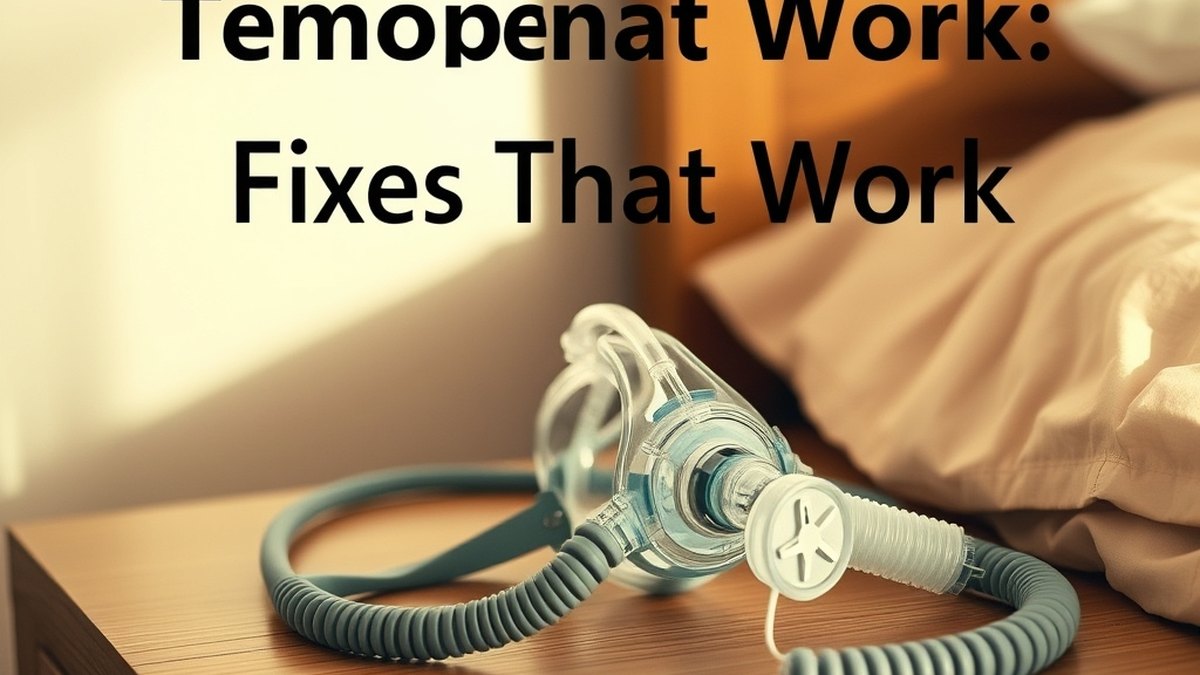
⚡ Key Clinical Takeaways
- Heated tubing is a length of corrugated hose containing embedded wiring that maintains a consistent temperature from the humidifier chamber to the mask.
- Rainout occurs when the temperature of the air inside the tube drops to its dew point, forcing water vapor to condense on the cooler tube walls.
- Setting the tube temperature too low relative to the humidifier, or turning the heated tube off entirely, delivers cold, dry air that strips moisture from nasal mucosa.
- Each manufacturer uses a different numbering scheme, but the physics is the same.
- Environmental factors often outweigh machine settings.
Quick answer: CPAP and tube temperature issues usually stem from a mismatch between the heated humidifier setting and the heated tubing setting, causing condensation (rainout) or dry air. Most users find comfort with the tube temperature set between 78–82°F (25–28°C) and the humidifier at level 3–4 on a 1–5 scale. Adjusting both together, using a hose cover, and ensuring the machine is level with or below the mask stops most problems without medical intervention.
What Heated Tubing Does for CPAP Therapy
Heated tubing is a length of corrugated hose containing embedded wiring that maintains a consistent temperature from the humidifier chamber to the mask. Heated CPAP tubing is a climate-controlled delivery system designed to prevent the air inside the hose from cooling below its dew point. When air cools, its capacity to hold water vapor drops, causing condensation known as rainout. Standard unheated hoses rely on room temperature, which often falls to 65–68°F (18–20°C) at night, creating a steep thermal gradient. Heated hoses typically draw 10–15 watts and can maintain air temperature within 1–2°F of the set point. Most modern platforms — ResMed ClimateLineAir, Philips DreamStation heated tube, and Fisher & Paykel ThermoSmart — use a sensor at the mask end to feed back real-time temperature to the flow generator. This closed-loop design allows the machine to compensate for bedroom temperature swings of up to 10°F without user input.
Managing temperature and humidity is part of broader sleep therapy support. The American Academy of Sleep Medicine provides clinical guidance on sleep disorders and treatment standards, while AASM patient education offers practical information for people using CPAP therapy.
Why Rainout Happens and How to Spot It
Rainout occurs when the temperature of the air inside the tube drops to its dew point, forcing water vapor to condense on the cooler tube walls. You will hear a gurgling sound, feel droplets on your face, or see water pooling in the mask cushion. Three concrete thresholds help diagnose the problem: a bedroom temperature below 65°F (18°C), a humidifier setting above level 4 on a 1–5 scale, or a tube temperature set more than 5°F below the humidifier output temperature. For example, if the humidifier heats air to 95°F (35°C) but the tube is set to 72°F (22°C), the 23°F gradient almost guarantees condensation. Users in humid climates (relative humidity > 60%) report rainout twice as often as those in arid regions. The difference between a heated tube at 80°F versus an unheated tube at room temperature (68°F) is the single biggest factor in eliminating nighttime gurgling.
Dry Mouth and Nasal Irritation: The Other Side of the Coin
Setting the tube temperature too low relative to the humidifier, or turning the heated tube off entirely, delivers cold, dry air that strips moisture from nasal mucosa. Symptoms include waking with a parched throat, nosebleeds, or sinus pressure. Clinical data suggest that inspired air below 70°F (21°C) with relative humidity under 30% increases nasal resistance by 20–30% within 30 minutes. A typical comfortable range for inspired air is 78–82°F (25–28°C) at 80–85% relative humidity. If you use a full-face mask, the required humidity is often higher because mouth leak bypasses the nasal airway's natural conditioning. Many users mistakenly lower the humidifier to stop rainout, which trades one problem for another. The fix is to raise the tube temperature first, keeping the air warm enough to hold the moisture the humidifier adds.
Untreated sleep apnea and poor therapy adherence can affect daytime alertness and overall health. The NHLBI - sleep apnea resource explains how sleep apnea affects breathing during sleep, while the NHLBI - sleep deprivation page describes the health effects of not getting enough rest.
Optimal Temperature Settings by Major Platform
Each manufacturer uses a different numbering scheme, but the physics is the same. The table below translates common settings into target air temperatures at the mask.
| Platform | Tube Temp Setting | Humidifier Setting | Target Mask Temp |
|---|---|---|---|
| ResMed AirSense 10/11 (ClimateLineAir) | Auto (default 81°F / 27°C) | Auto / Level 4 | 80–82°F (27–28°C) |
| Philips DreamStation (Heated Tube) | 3–4 (of 5) | 3–4 (of 5) | 78–82°F (25–28°C) |
| Fisher & Paykel SleepStyle (ThermoSmart) | Auto / 3–4 | Auto / 3–4 | 80–84°F (27–29°C) |
| Generic 3rd-party heated hose | 78–82°F | Mid-range | 78–82°F |
Start with the manufacturer’s “Auto” or middle setting for one week. Change only one variable at a time — tube temp or humidifier level — and note morning symptoms. A sleep clinic can download compliance data to verify that leak rates stay below 24 L/min while you test.
Room Temperature, Hose Position, and Accessories
Environmental factors often outweigh machine settings. Keep the bedroom between 68–72°F (20–22°C); every 5°F drop in room temperature increases rainout risk by roughly 30%. Position the CPAP unit lower than your head so gravity drains condensation back toward the humidifier, not into the mask. A fabric hose cover (typically $15–$25) adds 3–5°F of insulation, letting you lower the tube heater by one notch and save component wear. Route the hose over the headboard rather than under blankets; bedding traps heat unevenly and creates cold spots where condensation forms. If you use a heated hose with a standard (non-heated) humidifier chamber, upgrade to a heated chamber — the combination is engineered to work as a matched pair.
Seasonal Adjustments and Travel Considerations
Seasonal shifts require proactive changes. In winter, indoor humidity often falls below 20%; raise the humidifier one level and the tube temperature 2–3°F. In summer, air conditioning can chill the room to 65°F while the humidifier runs high; lower the humidifier one level and keep the tube at 80°F. When traveling, hotel rooms vary widely. Pack a 6-ft hose cover and a compact travel humidifier if your travel machine lacks integrated heating. Airline cabin pressure at 8,000 ft equivalent reduces air density, so the same heater wattage produces slightly higher temperatures; expect the tube to feel 1–2°F warmer at altitude. Allow 10 minutes after power-on for the tube sensor to stabilize before adjusting.
Troubleshooting Checklist: Step-by-Step
Follow this sequence when symptoms appear. Each step isolates one variable.
- Confirm the heated tube icon appears on the device screen; if missing, reseat the electrical connector at the machine port.
- Set tube temperature to 80°F (27°C) and humidifier to level 3; run one night.
- If rainout persists, raise tube temperature 2°F; if dryness persists, raise humidifier one level.
- Add a hose cover and ensure the machine sits below mask level.
- Check for mask leak > 24 L/min on the daily report; high leak cools the tube locally and triggers condensation.
- If issues remain after 5 nights, contact your clinician or schedule a follow-up at a sleep clinic for data review.
When to Involve Your Clinician or Sleep Clinic
Persistent rainout or dryness despite correct settings may indicate a mask fit issue, pressure change, or hardware fault. A clinician can review detailed flow waveforms to detect intermittent mouth leak or pressure-induced flow limitation that alters humidification needs. If your pressure was recently titrated upward by 2–3 cm H₂O, the higher flow rate moves air through the tube faster, reducing contact time with the heater; you may need to raise the tube temperature 3–4°F to compensate. Machines older than 5 years may have degraded heater elements or sensor drift; benchmark the outlet temperature with an infrared thermometer — it should read within 2°F of the set point. You can compare clinics in the Sleep Clinic Directory to find a provider who offers CPAP compliance downloads and mask fitting appointments. For help choosing a clinic, see How to Choose a Sleep Clinic.
Frequently Asked Questions
What is the ideal CPAP tube temperature setting?
Most users find 78–82°F (25–28°C) comfortable. Start at 80°F and adjust in 2°F increments based on morning symptoms.
Why does my CPAP hose gurgle at night?
Gurgling means condensation (rainout) has pooled in the hose. Raise the tube temperature, lower the humidifier, add a hose cover, and keep the machine below mask level.
Can I use a heated tube with any CPAP machine?
Only if the machine has a compatible heated-tube port and firmware. Proprietary connectors (ResMed ClimateLine, Philips DreamStation, Fisher & Paykel) are not cross-compatible.
Does a hose cover replace a heated tube?
A cover adds 3–5°F of insulation but cannot actively warm the air. It helps in mild environments; a heated tube is superior for consistent control.
How often should I replace heated tubing?
Manufacturers typically recommend replacement every 6–12 months. Inspect for cracked insulation, kinked wires, or connector corrosion.
Should I change settings when I travel to a different climate?
Yes. Adjust humidifier and tube temperature for the new room temperature and humidity. Allow 10 minutes for the sensor to stabilize after power-on.
This article is for informational purposes only and is not medical advice.
Ready to find an accredited sleep clinic near you?
Browse 7,246 verified sleep centers (4,975 AASM accredited), filter by tests and treatments, and reach out directly — all in one verified directory.
🔍 Search Accredited Centersor call a clinic directly from its profile — every listing has a verified phone number.
This medical guide complies with the American Academy of Sleep Medicine (AASM) standards of care for sleep disorders and reflects generally accepted clinical guidelines. It is informational and not a substitute for personalized medical advice.